
Common Early Vision Conditions

Common Early Vision Conditions
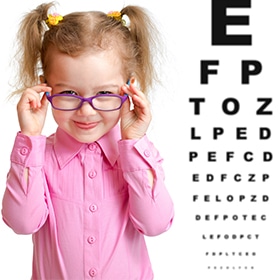
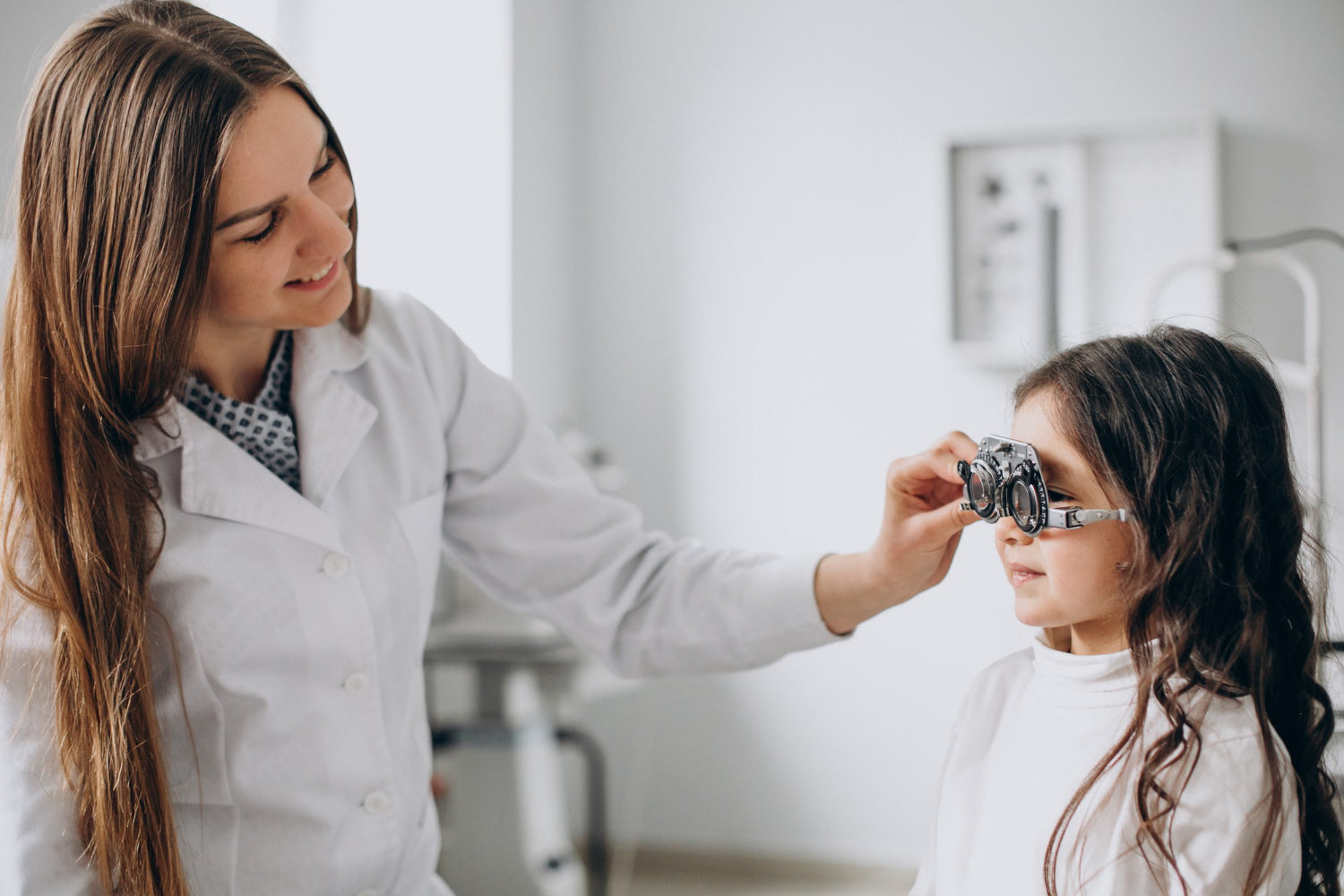
National ophthalmology surveys suggest that up to 25% of all school-aged children have vision conditions1, a rate that affects millions of children in the United States. Below are the vision conditions that most commonly affect preschool and school-age children.
Strabismus
Strabismus is the general term for misalignment of the eyes. Strabismus is caused by a muscle imbalance and will not correct itself without treatment.
Amblyopia
Sometimes called "lazy eye," amblyopia is a condition related to strabismus, in which one eye is weaker than another and is unable to properly align itself.
Esotropia
Esotropia is the involuntary inward (toward the nose) deviation of one or both eyes.
Exotropia
Exotropia is the involuntary outward (away from the nose) deviation of one or both eyes.
Hypertropia
Hypertropia is the involuntary upward deviation of one eye.
Astigmatism
Astigmatism is an eye with abnormal shape or curvature. A healthy eye has the shape of a sphere, while an eye with astigmatism is shaped more like an egg or football.
Hyperopia
Hyperopia is the medical term for farsightedness, where distant objects are seen clearly while closer objects appear blurry.
Myopia
Myopia is the medical term for nearsightedness, where close objects are seen clearly while distant objects appear blurry.
Reference: Journal of Behavioral Optometry, Visual Screening of Adjudicated Adolescents, Vol. 10, No. 1, 1999.