

EyeOnVision September, 2022
Portable Acuity Screening for Any School
Validation of Patched HOTV with Amblyopic Patients and Bangerter Normals
Clinical Literature Citation
Tsao Wu M, Armitage MD, Trujillo C, Trujillo A, Arnold LE, Tsao Wu L, Arnold RW. Portable acuity screening for any school: validation of patched HOTV with amblyopic patients and Bangerter normals. BMC Ophthalmol. 2017 Dec 4;17(1):232. doi: 10.1186/s12886-017-0624-y. PMID: 29202721; PMCID: PMC5716052.
Background: There was a critical need to validate and calibrate portable acuity screening tools so amblyopia could be detected quickly and effectively at school entry.
Methods: Spiral-bound flip cards and a downloadable PDF surround HOTV acuity test box with critical lines were combined with a matching card. Amblyopic patients performed critical line testing followed by threshold acuity evaluation, which was then compared to patched E-ETDRS computer-validated acuity. Five normal subjects wore Bangerter foil goggles to simulate optical blur for comparative validation.
Continue Reading Study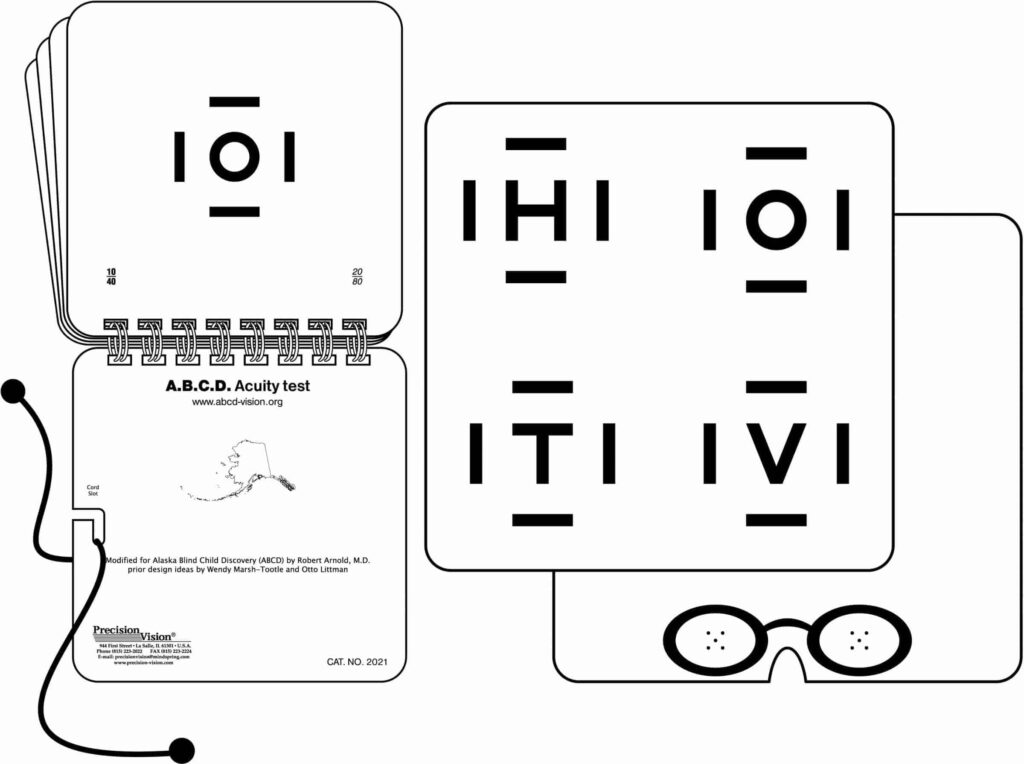
Video Guide: Alaska Blind Child Discovery Test Flip Book (ABCD) – Developed by Dr. Robert Arnold, MD
The ABCD Testing Framework
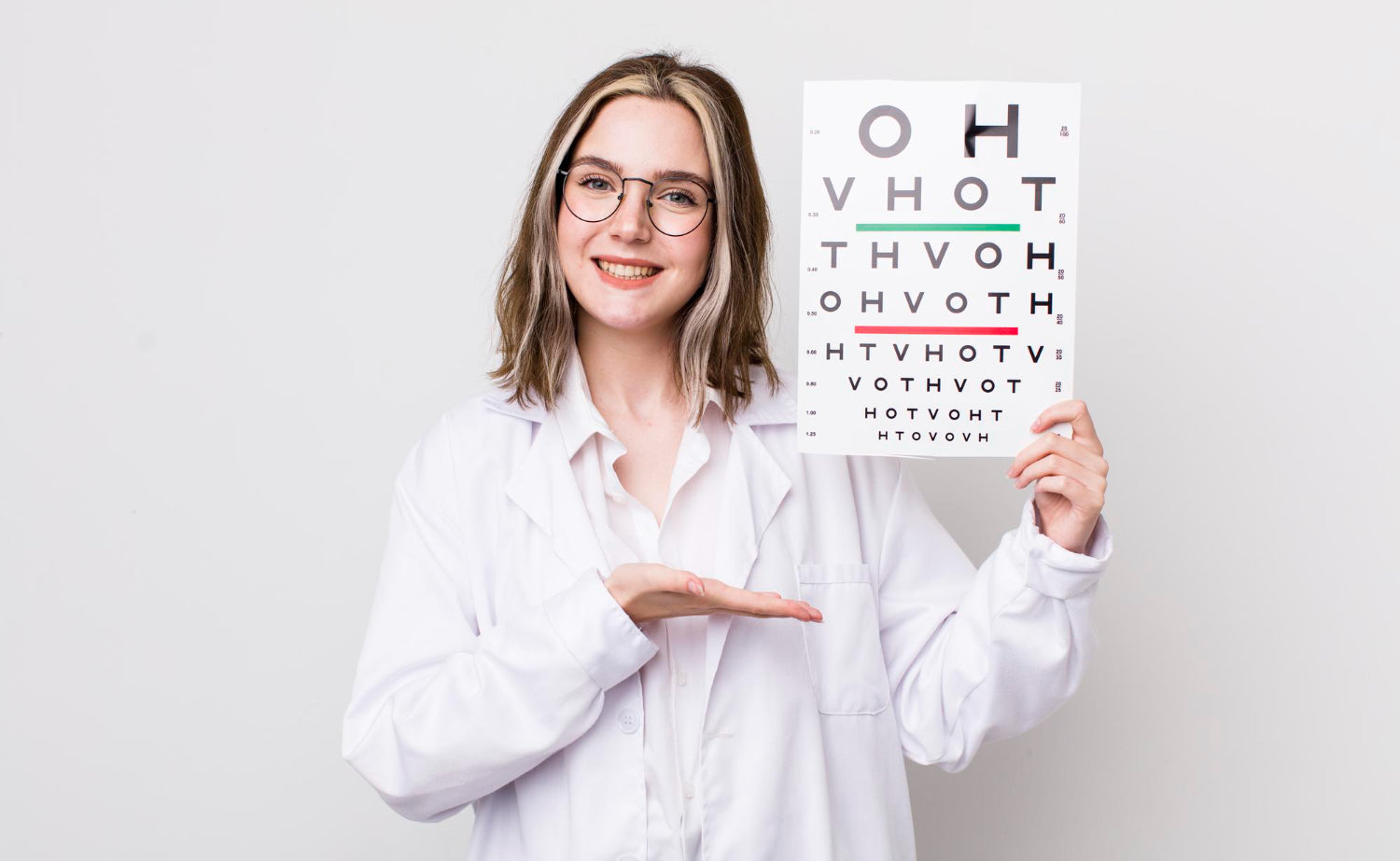
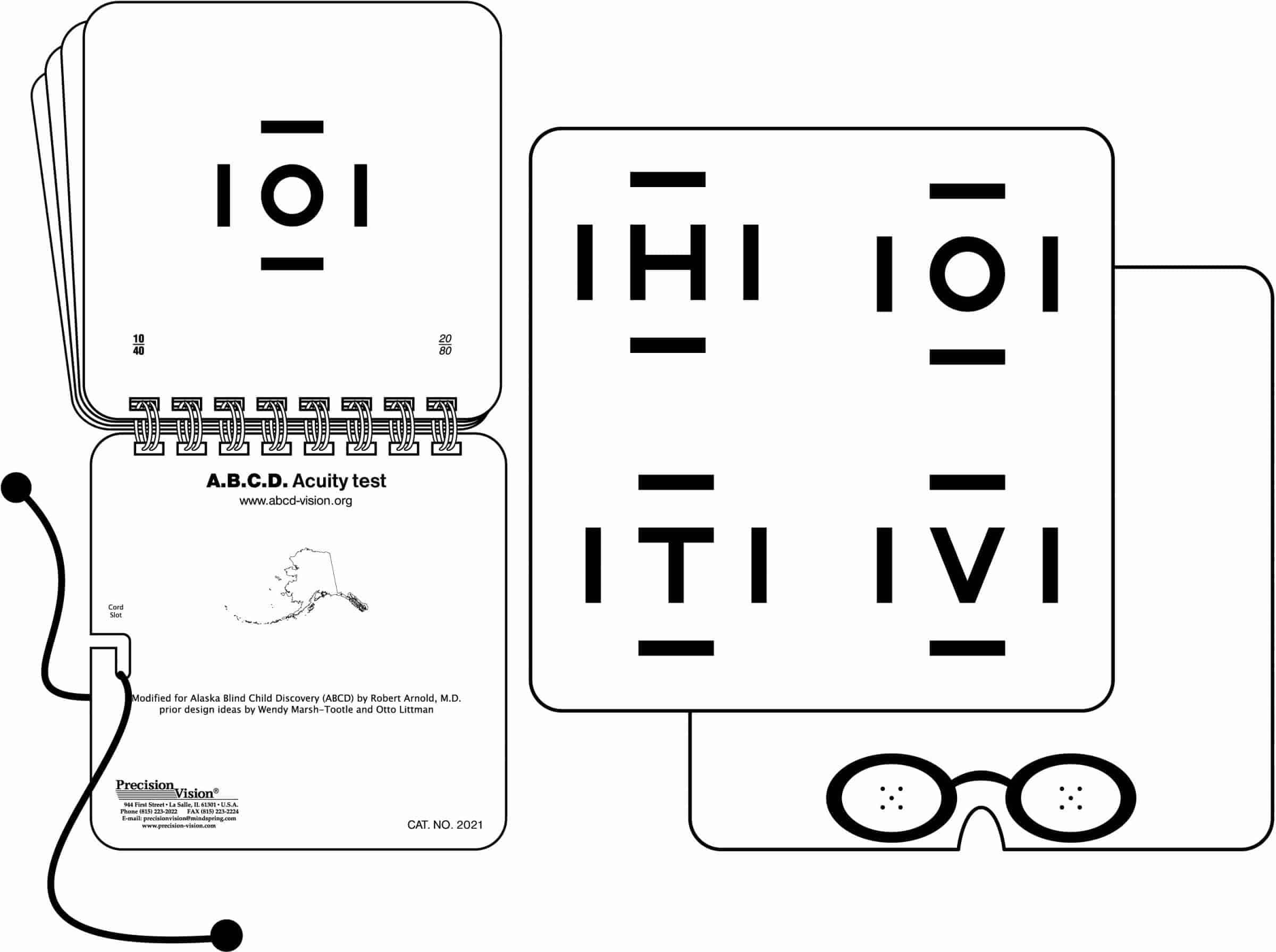
Adapting state-of-the-art principles for pediatric acuity testing, the ABCD configuration suggested an advanced modification of Wendy Marsh-Tootle’s Surround HOTV 10-foot test card. The ABCD HOTV card presents 4 optotypes down to a 20/16 range, whereas Dr. Tootle’s template stopped at 20/20.
The matching card features surrounded letters to avoid crowding confusion, a “spectacle-delineated” pinhole enhancement, and an HOTV near card that resembles Paul Runge’s near system but is adapted to just 10 inches—found to more accurately approximate a child’s natural lap-reading distance. The 10-foot distance and 10-inch near point are quickly demarcated by detachable measuring strings. Age-appropriate screening cut-offs (20/40 for K and below, 20/32 for older than K) are located instantly by offset index tabs. This chart has been deployed extensively with objective screening methods in the Anchorage School District.
Read More Product Specs
McCormick Place, Chicago
Friday, Sept. 30 – Monday, Oct. 3
Stop By Booth 2911
Chat with our specialists and pick up a complimentary Conversion Card. Quickly convert contrast values, ICD-9 and ICD-10 vision loss reporting values, as well as worldwide notations with this handy pocket card.


Q: What is Normal Vision?
A: “Normal” visual acuity for healthy eyes is one or two lines better than 20/20. In population samples, the average acuity does not drop down to the 20/20 level until age 60 or 70. Always remember that the 20/20 reference standard does not refer to the average acuity of American eyes, just as the US standard foot is defined completely independently of the “normal” length of American feet.
Welcome to the Precision Vision family, take a moment to get to know us!
This month’s spotlight is on a member of our Finance Team. Desiree has been with Precision Vision since March of 2021. As an Accounting Assistant, Desiree supports all the financial operational functions required to maintain smooth operations for our customers, suppliers, and PV personnel. Desiree brings her calm, quiet demeanor to the office and sprinkles in a great sense of humor, making her a true pleasure to work with.
Personnel Dossier
Name: DesireeDepartment: Finance
Tenure: 1.5 years
Birth Month: October
Hobby: Spending time with family and friends
Favorite Movie: National Lampoon's Christmas Vacation
Favorite Food: Pizza
What is the most rewarding thing about serving the eye care industry?
“For me, it is the ability to play a small role in improving the quality of life for others.”
Favorite Manufactured Product Component?
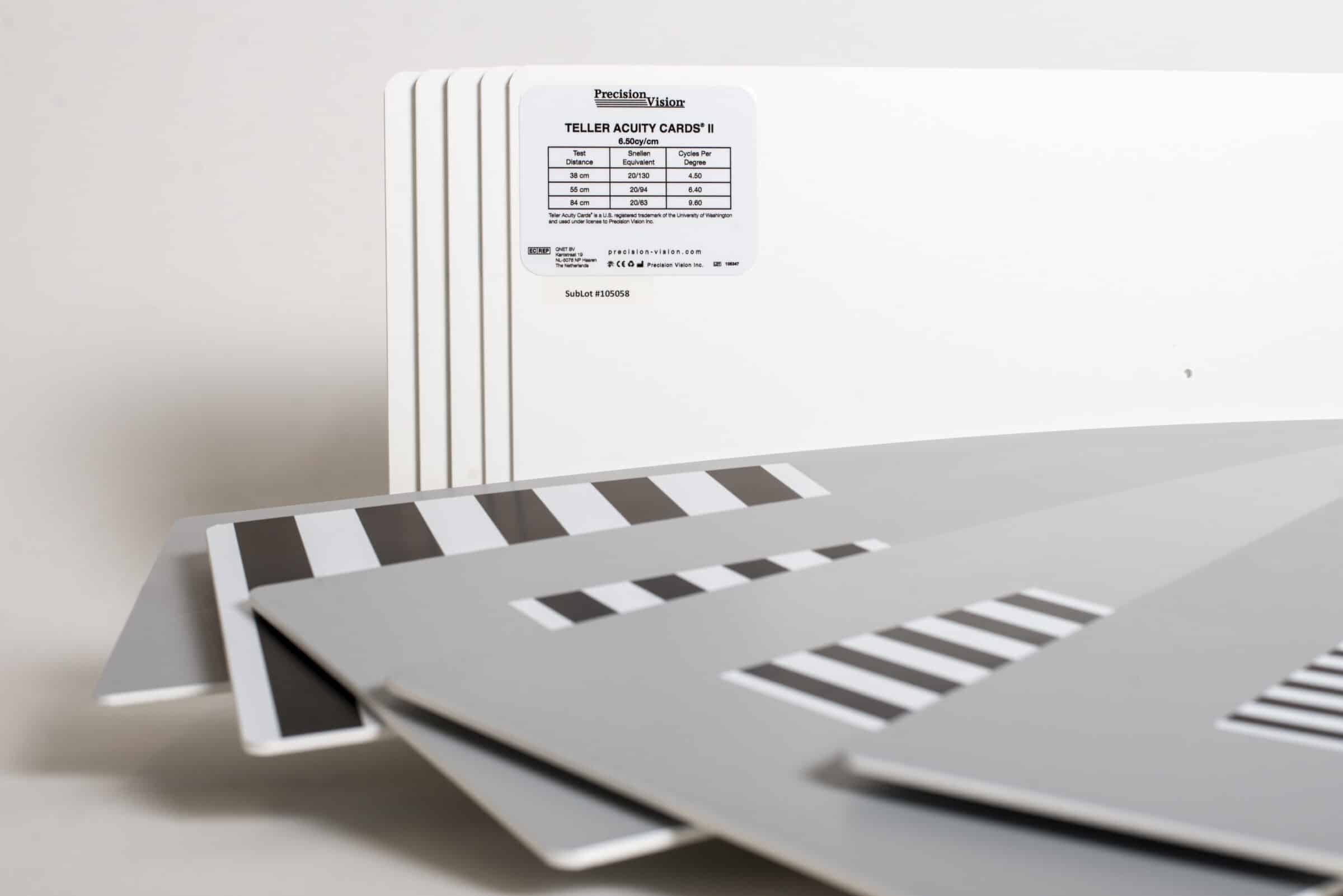
“Teller Acuity Cards and the ability to test vision on infants. My son has worn glasses since he was an infant, so vision tests that are specific to infants and young children always have a special place in my heart.”