





February 2014 - Precision Vision Newsletter
Optometry Ranked No. 4 Health Care Career
CareerCast Multi-Year Analysis Reflects Surging Demand Across the Ophthalmic Sector
Meeting Modern Healthcare Demands
According to comprehensive data compiled by CareerCast, which has evaluated annual workforce indicators for over 25 years to catalog premier employment tracks, Optometry has been ranked as the No. 4 healthcare career. This stellar ranking is framed by shifting macro parameters: the implementation of the Affordable Care Act (ACA) and an aging demographic are projected to generate more than 5 million healthcare jobs through 2020, as reported by the U.S. Bureau of Labor Statistics.
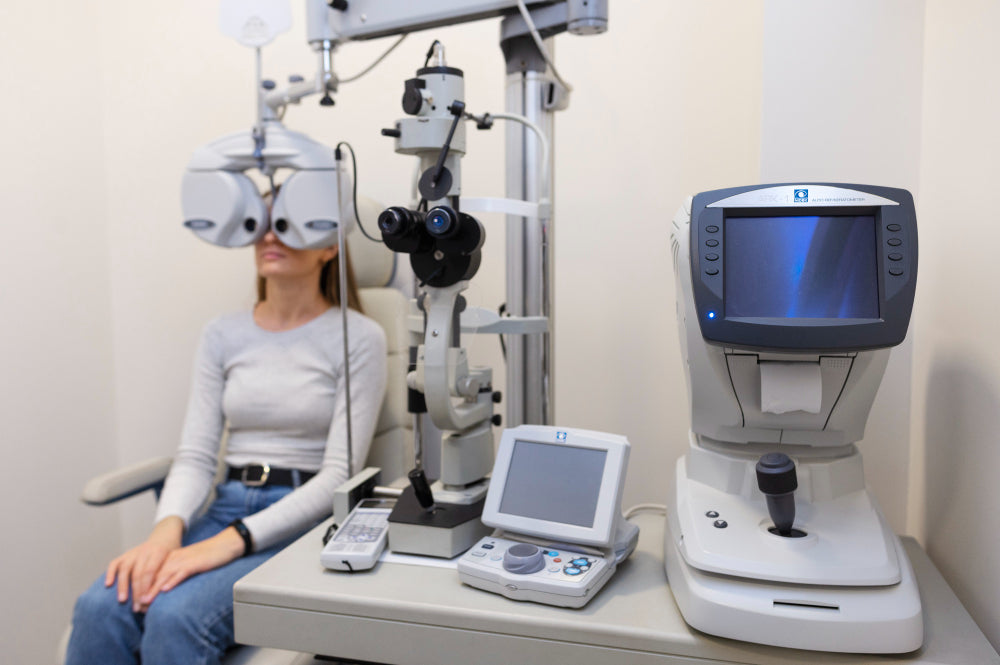
This unprecedented system scaling underscores the vital necessity for eye care practices to equip their checking lanes with highly efficient, standardized, and repeatable vision screening tools to manage expanding patient matrices seamlessly.
Read AOA Career ReportWhy Leading Practices Trade Days "Off" for Days "On"
It may sound counterintuitive to swap out a standard holiday block for a structured clinical focus day. While physical detachment offers passive rest, dedicating tailored, uninterrupted blocks to exploring emerging medical technologies and pursuing passion-driven screening ideas is the ultimate recipe to expand your practice capabilities.
Explore Executive Renewal Strategies →Preclinical Screening for Retinopathy of Prematurity (ROP) Using IGF-1 Biomarkers
Adhering strictly to current ophthalmic consensus recommendations for preventing advanced Retinopathy of Prematurity (ROP) requires neonatology centers to screen an exceptionally massive volume of low-birth-weight infants. To optimize clinical resource deployment, a prospective multi-center study was executed to establish an objective, highly predictive triage paradigm.
The trial data isolates a powerful biochemical metric: quantifying serum levels of **Insulin-like Growth Factor 1 (IGF-1) exactly three weeks post-partum**, cross-referenced with the documented presence of systemic sepsis, yields an outstanding predictive valuation for subsequent ROP development.
Alfuzosin Monotherapy Mitigates Intraoperative Floppy Iris Risks
A rigorous head-to-head clinical trial published in the journal Ophthalmology reveals that patients taking systemic alfuzosin to manage benign prostatic hyperplasia (BPH) experience a significantly lower incidence of moderate-to-severe Intraoperative Floppy Iris Syndrome (IFIS) during cataract extraction compared to those on tamsulosin (Flomax).
Because tamsulosin induces prolonged, high-affinity antagonism of prostatic $\alpha_{1A}$-adrenoceptors on the iris dilator muscle, it causes intraoperative iris billowing and sudden miosis. Sourcing precise pharmacological histories helps surgical teams optimize fluid dynamics and mechanical dilation rings ahead of time.
Microsoft Xbox Kinematics Transformed into Low-Vision Rehab Engines
Shouts of encouragement echo through the main auditorium of Manhattan’s VISIONS at Selis Manor as low-vision seniors step up to interactive virtual bowling alleys. Leveraging controller-free Microsoft Xbox tracking cameras, players swing their arms to execute spatial strikes.
Integrated audio-description tracks and specialized spatial orientation coaching instantly tell the bowlers: “Two pins remaining on the left pocket!” By merging physical gross motor movement with real-time auditory loops, this innovative framework builds profound neurological adaptation, proving that gamified tech can radically enhance daily spatial mapping.