


Precision Vision Assists the Honduras Medical Mission 2010 - Precision Vision
Field Metrics for Global Relief Initiatives
Precision Vision® Diagnostic Tools Support High-Volume Triage and Ophthalmic Interventions in Honduras
Precision Vision® remains deeply committed to advancing global ophthalmic equity by supplying uncompromised, research-grade vision testing systems to humanitarian groups operating in severely resource-constrained settings. We are thrilled to highlight the profound impact of the **Central American Relief Effort (CARE)** medical deployment to Honduras, an ongoing seasonal mission backed by our diagnostic equipment contributions.
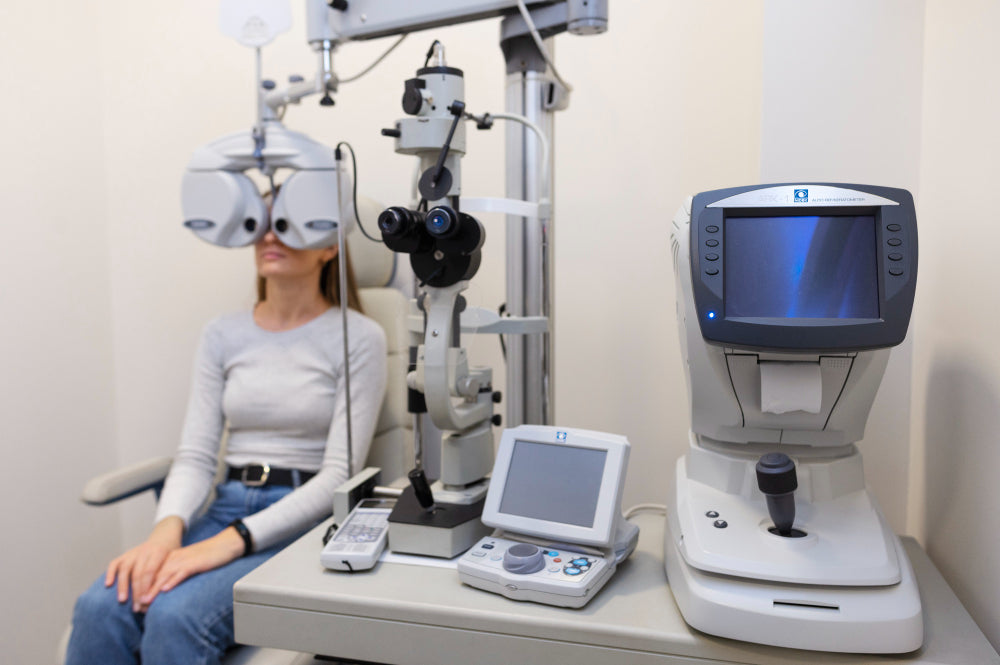
Each year, a dedicated contingent of specially trained orthoptists, optometrists, and ophthalmic surgeons volunteer their skills to execute extensive visual screenings, pathology triage, and sight-restoring surgical interventions across remote Honduran municipalities. Navigating demanding logistics—including primitive road networks, variable ambient lighting, and severe power infrastructure deficits—the team managed to establish highly effective diagnostic lanes that delivered essential eye care to underserved populations.
“The important thing is we have successfully reached hundreds of children and adults who previously held absolute zero access to ophthalmic evaluation. Our team traveled with 11 massive supply crates packed with eyeglasses, therapeutic drops, automated photoscreeners, and standardized test cards, establishing full clinical tracks directly inside remote public schools.” – Noelle S. Matta, CO, CRC, COT, Mission Orthoptist
Honduras Field Registry Metrics
| Total Patients Evaluated: | 1,677+ |
| Pediatric Cohorts: | 1,195+ |
| Adult Cohorts: | 482+ |
| Spectacles Dispensed: | 265+ |
| Pediatric Refractions: | 60+ |
| Presbyopic/Adult Lenses: | 205+ |
| Surgical Referrals Logged: | 80+ |
| Pediatric Strabismus: | 6+ |
| Dense Adult Cataracts: | 72+ |

Chronological Deployment Log: Overcoming Field Constraints
Operating mobile screening lanes across rural schools requires extreme hardware stability. The clinic logs emphasize the acute challenges of environmental glare, equipment thermal management, and an overwhelming demand for reading corrections among mountain communities.
The triage team split into two operational divisions. The screening sector moved directly into the local Republica de Venezuela school, testing 210 children before noon, while alternate teams established clinical tracks at the San Marcos facility. Pediatric cohorts from the nearby Republic of Guatemala school were bused directly to the clinic for comprehensive refractions, logging continuous patient flows from 8:00 AM until 6:00 PM. Critical surgical paths were secured for three urgent cases, with transport arranged directly to the capital for specialized treatment.
A detachment navigated a punishing 90-minute transit over rough dirt tracks to reach the isolated mountain community of Duyure. This marked the first time the local population had ever received objective eye care. Partnering with a localized Peace Corps translator, the team successfully screened high subject volumes. A pediatric patient presenting with severe craniofacial malformations, underdeveloped pinnae, and an extreme comitant eye drift was successfully triaged and scheduled for a corrective strabismus procedure.
Teams scaled steep, highly unpaved terrain using 4-wheel-drive vehicles to reach isolated sectors surrounding Pespire. These facilities operated completely independent of running water or an active electrical grid. Technicians faced equipment performance barriers as high-intensity solar heat caused mobile hardware to overheat, highlighting a critical operational requirement to introduce independent portable generator systems for future high-volume mountain campaigns.
Deploying into San Jose, word of the clinic spread rapidly, prompting an influx of kindergarten cohorts and local agricultural workers. The overriding adult clinical deficit identified was presbyopic near refraction friction; local commercial markets do not distribute reading glasses, rendering near magnification an absolute lux luxury. Final field triages were conducted directly in a hotel lobby to evaluate children of the transport staff, catching a severe case of strabismus for future surgical intervention.
DAMATO 30-Point Visual Field Campimeter
The DAMATO campimeter implements high-contrast black test stimuli presented on a clean white background matrix. This specific luminance configuration guarantees absolute testing stability and data accuracy even when operating inside unstable field environments lacking calibrated overhead room lighting. By confining the mapping array to exactly 30 strategic diagnostic coordinates, the system drastically compresses examination time while maintaining deep sensitivity for charting scotoma progression from glaucoma, advanced maculopathy, or neurological field disruptions. It is an exceptional layout for rapid, high-volume epidemiological tracking.
View Campimeter Specs →Sloan Continuous Text Low Contrast Pocket Card
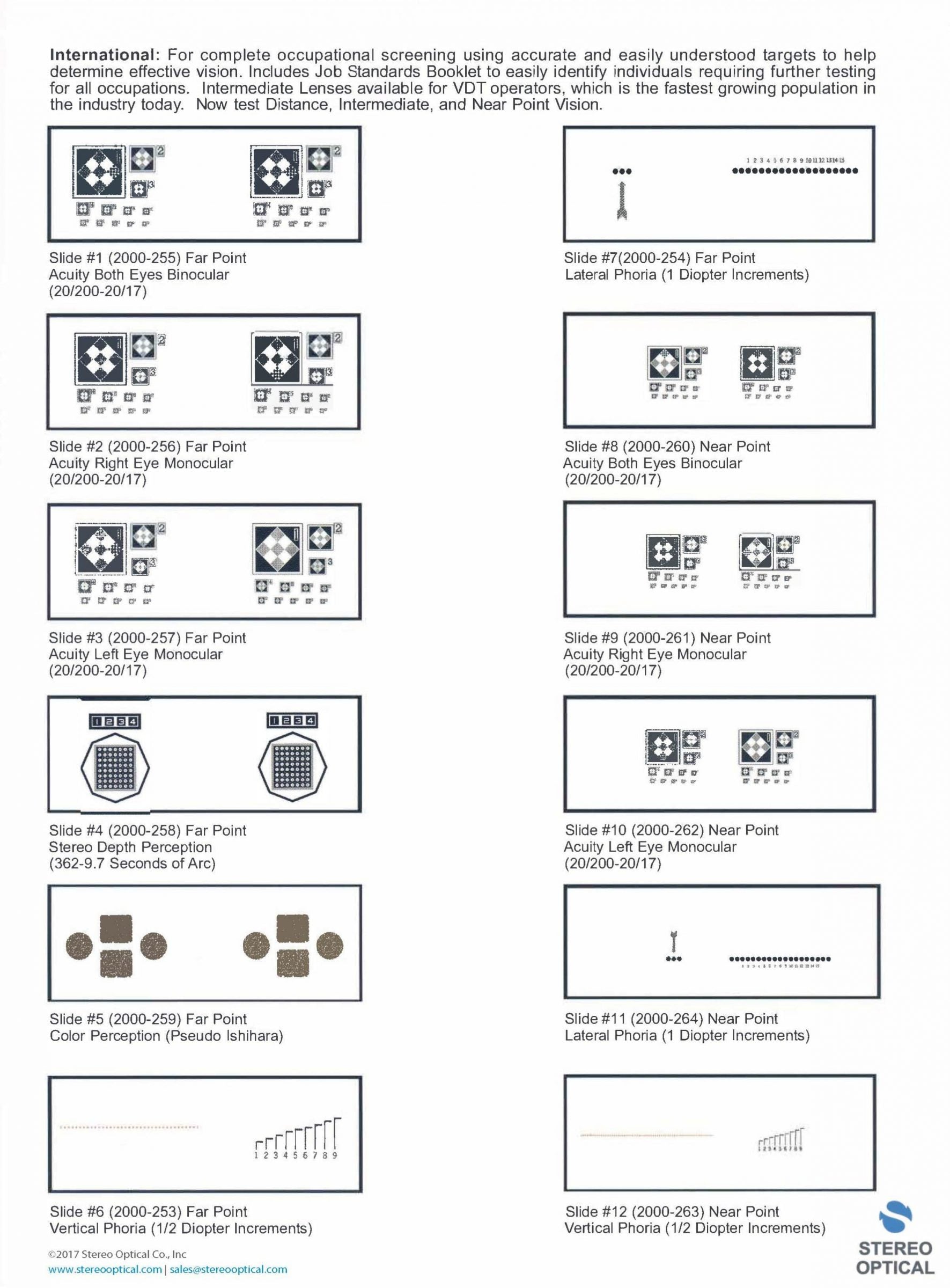
This portable near-vision card maps an extensive acuity range from $8\text{M}$ down to $0.20\text{M}$ ($20/400$ to $20/10$ Snellen equivalents). The anterior side utilizes highly calibrated Sloan optotypes configured to a fixed **10% contrast level**, matching the geometric guidelines of the gold-standard ETDRS 2000 Series (blending Charts 1 and 2). The reverse face presents a continuous text reading block calibrated for a 40 cm (16 in.) working distance at an identical **10% low-contrast threshold**, perfectly simulating daily visual tracking challenges like reading newspapers. Protected by an advanced polymer layer, the card faces can be thoroughly washed or cleaned with alcohol without fading. Highly recommended for rapid field triage.
Order Low Contrast Pocket Cards →Spielmann Translucent Diagnostic Occluder
Unlike standard opaque eye paddles that completely blind an isolated pathway from view, the **Spielmann Translucent Occluder** utilizes a specialized double-sided frosted lens coating. This optical treatment effectively eliminates form vision and blocks the patient from perceiving the target chart, while remaining sufficiently clear to let the examiner monitor fine ocular movement, latent deviations, or nystagmus oscillations beneath the occlusion.
By allowing continuous binocular observation during a monocular threshold exam, it provides practitioners with crucial extra information. Manufactured from robust, high-impact polymers, this instrument stands up to rigorous chemical sterilization across extensive clinical rosters.
How Can You Support the Mission?
Contribute to the Central American Relief Efforts
Every donation directly funds the complex logistics required to transport trained medical specialists, heavy surgical instrumentation, and vital pharmaceutical supplies to remote field hubs. Financial contributions can be designated securely through the centralized mission portal or processed via corporate correspondence channels:
Attn: Family Eye Group Regional Mission
2117 Saddleridge Road • Lancaster, Pennsylvania, 17601
Direct Logistics Office: 717.299.4942