


Patti Pics™ Encourages Low Vision Students to Learn and participate in testing comfortably - Precision Vision
Bridging Cognitive and Low Vision Testing
How Perkins School for the Blind Adapts Patti Pics™ Optotypes for Interactive, Reliable Pediatric Assessment
At Precision Vision®, we are deeply driven by clinical innovation, but we recognize that the true credit belongs to the practitioners, clinicians, and educators working directly on the ground. A powerful case history from the historic **Perkins School for the Blind** in Watertown, Massachusetts, beautifully illustrates how tailored diagnostics can maximize potential for low-vision students with complex needs.
Linda Ahern Roth, a specialized Teacher of the Visually Impaired (TVI) in the secondary program at Perkins, faced a recurring bottleneck when preparing older adolescents and young adults (ages 16 to 22) who presented with severe cognitive delays. Traditional pediatric testing arrays frequently feature everyday symbols like a house, a circle, or an apple. However, because many low-functioning students had never been explicitly taught these distinct vocabulary terms, they frequently stalled during vision exams—not due to an absolute lack of resolution, but due to a language barrier.
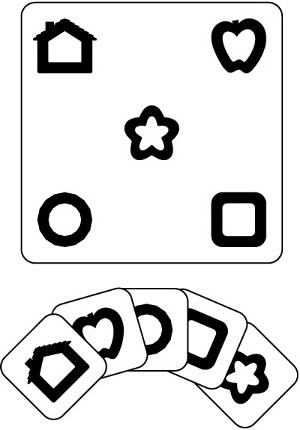
Securing Pre-Test Consistency: When the low-vision department at Perkins standardized their lane charts around our calibrated **Patti Pics™ symbols**, Linda initiated an innovative training pipeline. By securing permission to digitize the optotypes, she built interactive computer activities using IntelliTools® Classroom Suite software to teach students symbol recognition and names *prior* to their clinical exams.
Patti Pics™: Calibrated to strict Snellen grid metrics
The Perkins School Adaptive Training Suite
To streamline testing mechanics and keep students comfortable outside the intimidating environment of a dark clinical lane, Linda's digital framework scales systematically across three interactive learning blocks:
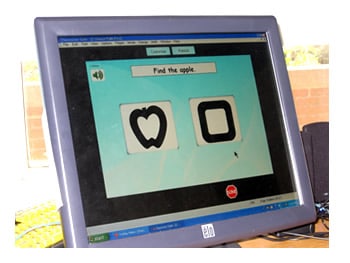
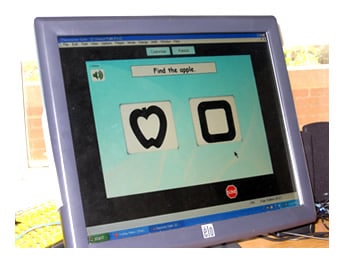
The program displays two large, visually uncluttered Patti Pics™ targets on a touch-screen monitor. Automated vocal commands prompt the user (e.g., “Find the Square” or “Find the Apple”). The student selects the option directly on the interface, reinforcing basic symbol-to-name association loops.
A singular optotype populates the display field. Students can engage an external adaptive switch to trigger the spoken name, or match the screen image against a physical, high-contrast hard-copy placard sitting on the desk. The instructor can silence the system voice to track the student's verbal identification capacity.
Individual targets appear sequentially. The student must isolate and strike the matching symbol on an alternative, programmable IntelliKeys® flat keyboard. The interface provides real-time correction feedback loops, prompting the user to try again if a selection misses the calibrated target.
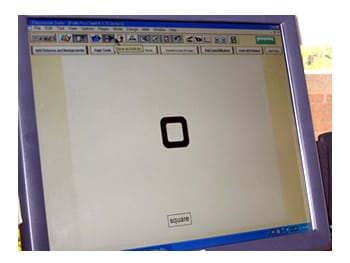
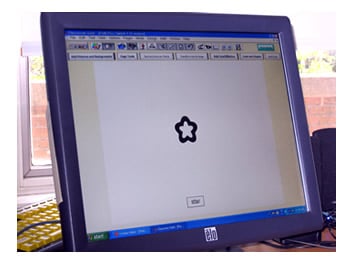
Interactive matching matrices run at discrete size parameters: $4.5^{\prime\prime}$, $3^{\prime\prime}$, $1\frac{5}{8}^{\prime\prime}$, and $1\frac{1}{4}^{\prime\prime}$
The clinical feedback has been exceptional. Ophthalmologists evaluating these challenging cohorts note a profound rise in absolute data precision and threshold reliability. By placing the student further back from the monitor, the training module transitions seamlessly into a forced-choice distance visual acuity exam—bypassing speech limitations entirely via manual matching keyboard responses.
Patti Cake™ Small Fixation Paddle
Infant populations possess a strong biological bias toward tracking facial geometries rather than geometric forms or random configurations. Capitalizing on this neurological pathway, the compact **Patti Cake™ Small Fixation Paddle** prints a friendly facial illustration on one face and high-contrast recognizable symbols (like a bird outline) on the reverse to maximize infant visual tracking.
The paddle features a smooth, calibrated oval design that serves a dual purpose as an ergonomic occluder for monocular assessment. This combination reduces instrument swapping on the fly, streamlining pediatric workflows.
Peek-a-Boo Patti™ Low Contrast Test Set
Isolating early contrast degradation in infants or patients with severe cognitive disorders requires highly engaging visual targets. The **Peek-a-Boo Patti™ Low Contrast Test** utilizes our standardized face contour across heavy-duty, cleanable cards.
The full kit features the identical face target screened across **six precisely calibrated Weber contrast gradations**. By monitoring preferential looking tracking movements or pointing gestures, operators can log contrast sensitivity thresholds rapidly without requiring verbal feedback.
Share Your Specialized Lane Adaptation Stories
Precision Vision® wants to feature your clinical breakthroughs. Tell us how your diagnostic team, research center, or educational group leverages our standardized optotypes to resolve testing friction and improve low-vision paths. If you have an insightful study highlight or a unique workspace implementation to share, connect with our editors today.
Submit Narrative to Editorial Desk