


April 2015
The Industry Loses an Icon
Honoring the Legacy and Visionary Leadership of Dr. Alfred A. Rosenbloom, OD, FAAO
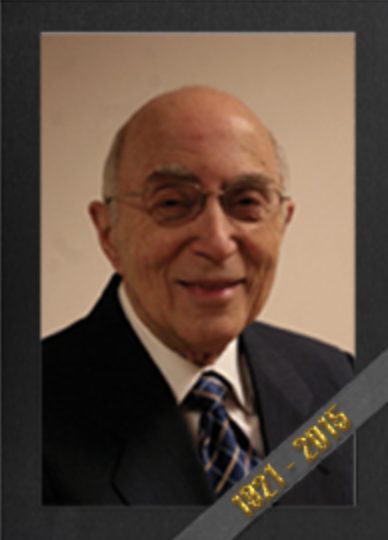
Dr. Alfred A. Rosenbloom (1921 – 2015)
A Lifelong Dedication to Low Vision Rehabilitation
On April 7, 2015, one of our industry’s most noted and influential experts on Low Vision rehabilitation, Dr. Alfred Rosenbloom of The Chicago Lighthouse, passed away at the age of 94. An esteemed member of the National Optometry Hall of Fame, Dr. Rosenbloom was globally celebrated for his visionary leadership, tireless clinical advocacy, and foundational contributions to optometric education with a specialized emphasis on low vision care.
Dr. Rosenbloom is survived by his beloved wife of 66 years, Sarah, their two children, Alfred III and Susan, and two grandchildren, Aaron and Jessie. Reflecting on his immense impact, Dr. Tracy Matchinski, OD, noted: “His passing is a sad event, but it also allows a profound reflection on his many accomplishments and contributions. Dr. Rosenbloom championed a clinical life exceptionally well lived.”
Condolences & Memorial Tracks:
Expressions of sympathy may be directed to the Rosenbloom Residence: 910 N. Lake Shore Drive, #1819, Chicago, IL 60611.
Memorial gifts may be sent to the Alfred & Sarah Rosenbloom Center on Vision and Aging, Illinois College of Optometry, 3241 S. Michigan Ave, Chicago, IL 60611.
Dr. Hoggatt and the MacKinneys Return from Nepal!
We recently sent out our warmest thoughts to Dr. Judy Hoggatt of Suson Eye Specialists, M.D. S.C., alongside Ted and Rachel MacKinney with TEAM (The Evangelical Alliance Mission). The group embarked on an intensive medical deployment to the remote Sankhuwasabha district in Nepal, positioned deep in the rugged terrain east of Mt. Everest, to establish **Mercy Clinic**—a permanent medical installation in the isolated village of Chepuwa. Upon their successful return to the United States, Rachel shared a brief retrospective detailing the deployment:
Our close colleague, Dr. Judy Hoggatt, flew directly into the valley via helicopter to drive clinical operations during our critical opening week. We want to extend our deepest gratitude to Precision Vision for the generous diagnostic hardware donation that Judy brought in her equipment packs. Judy deployed the calibrated visual acuity charts on-site and spent time training our local health workers on proper distance measurement protocols, ensuring this donation will protect patient data for years to come. Thank you so much!” – Ted and Rachel MacKinney

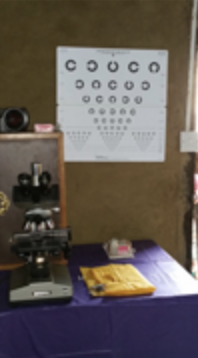
Precision Vision was deeply honored to supply your team to advance eye care in this worthy, global cause!
Eye on Vision: April Corporate Broadcast
ARVO General Assembly Preview
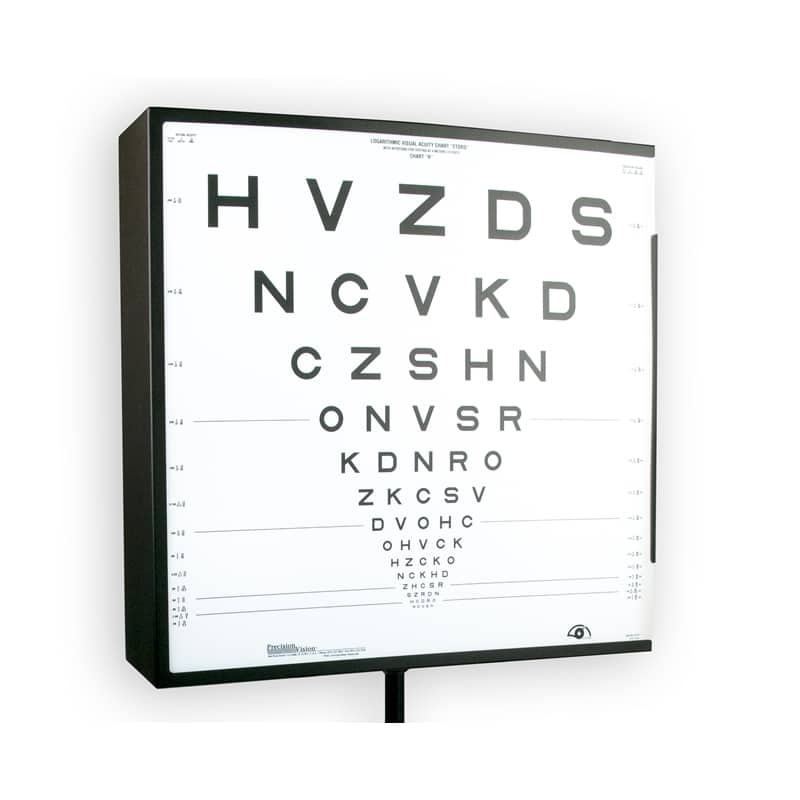
Precision Vision® ETDRS Cabinet Replacement Bulbs: Ask for Them by Name!
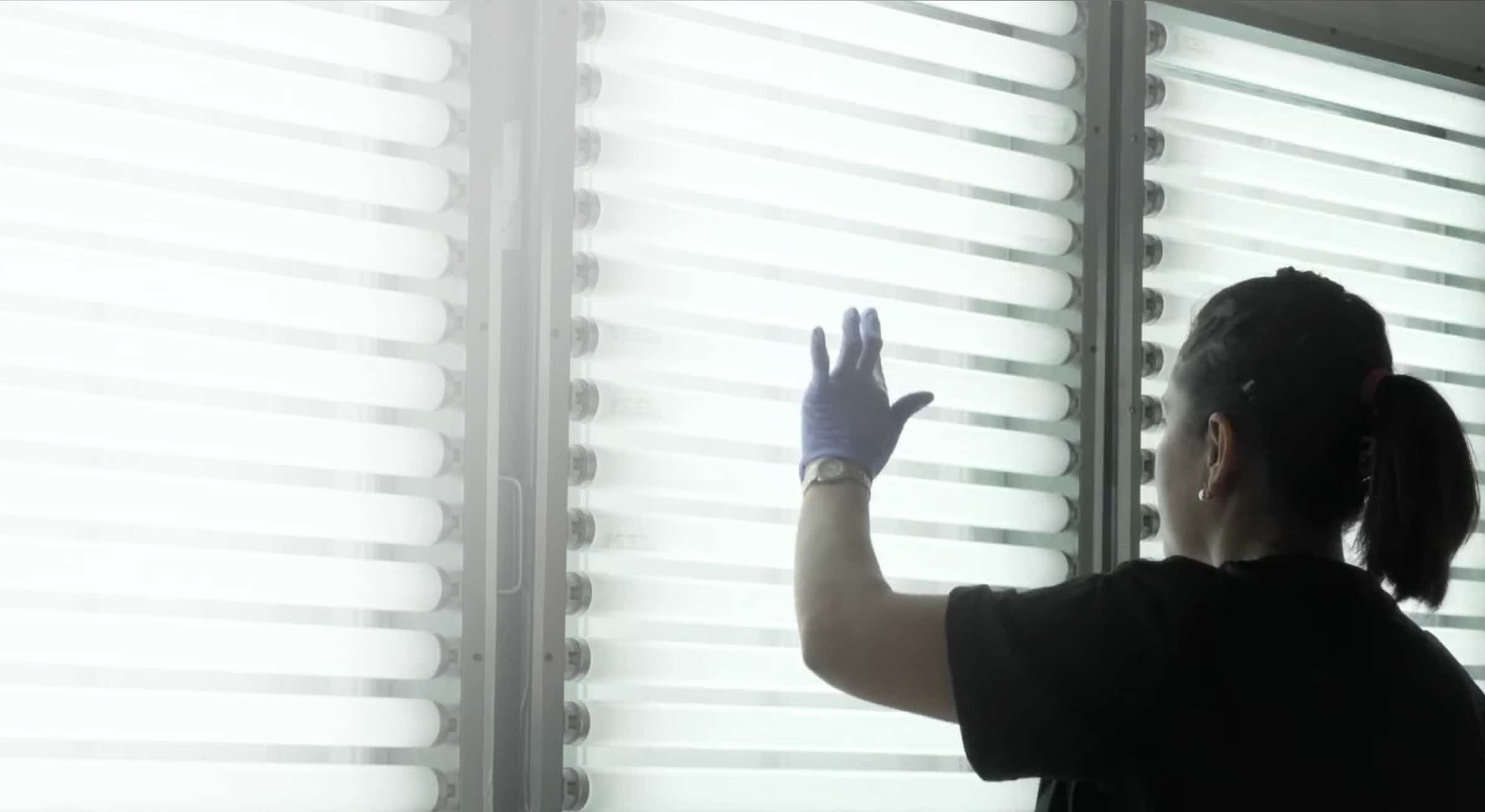
Your transilluminated Precision Vision ETDRS Illuminator Cabinet and its internal illumination components have been very specifically calibrated as an integrated system to guarantee precise luminance uniformity across your logMAR chart lines.
We want to issue a firm clinical caution regarding substandard counterfeit bulbs and look-alike components circulating the marketplace.
Third-party bulbs marketed as suitable replacements for standard dual-bulb ETDRS retrofits fail to achieve the mandated candela-per-square-meter output or edge-to-edge light distribution. This instantly compromises data integrity across multi-visit clinical trial tracking lanes. To protect study parameters, always source genuine consumables directly through our track.

*When ordering replacement components, please locate and supply your specific cabinet operating voltage, model designation, and system Lot Number from the tracking plate near the primary power switch.

Of the three pillars of visual capability—Visual Acuity, Contrast Sensitivity, and Visual Field—contrast processing is often the least understood. To address this, Dr. August Colenbrander will lead a series of deep dives to resolve your most frequently submitted contrast sensitivity questions:
Q: Can you define the fundamental physical and physiological differences between Contrast and Contrast Sensitivity?
A: Contrast describes an objective property of the physical object being evaluated. Contrast sensitivity describes an intrinsic property of the neurological visual system that is looking.
The physical reflectivity ratios across different segments of an object—and thus its innate contrast—remain completely fixed regardless of illumination changes. However, the contrast sensitivity profile of an observer fluctuates heavily based on ambient illumination levels. For instance, low-contrast print that is completely unresolvable in a dim clinical lane can cross the recognition threshold instantly once task lighting is increased.
The human visual system naturally adapts to an immense range of luminance levels, from a sunlit beach to a moonlit forest floor, which heavily complicates raw absolute-scale measurements. While most commercial contrast tests are engineered for a strictly controlled environment with optimal baseline transillumination, adjusting general lane illumination or providing targeted task lighting can immediately improve functional visibility for individuals with contrast degradation. Conversely, for certain specific pathologies (such as albinism), decreasing ambient lighting parameters actually upgrades spatial recognition thresholds.
Next Issue: Dr. Colenbrander will address the psychophysical differences between Sine-Wave Grating arrays and Letter Test matrices.

%0A%0A%0A%0AA%20Lifelong%20Dedication%20t...)