





Reading Charts: International Reading Speed Texts (IReST) - Precision Vision
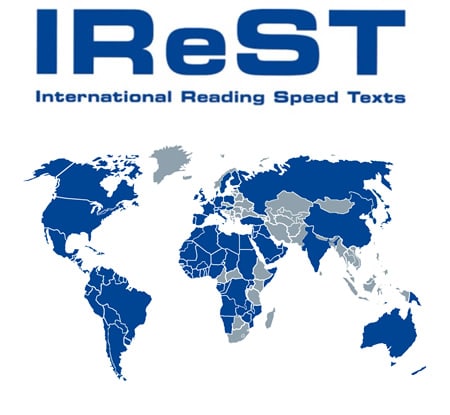
International Reading Speed Texts (IReST)
Precision Vision Showcases Prototype of the Expanded Standardized Multilingual Reading Series at ARVO
A Standardized Blueprint for Near Visual Acuity Performance
At the recent ARVO gathering, Precision Vision proudly unveiled a prototype of the newly expanded IReST™ (International Reading Speed Texts) format series of standardized near vision reading books. The demonstration generated tremendous enthusiasm across the ophthalmic sector, sparking deep technical conversations regarding its multi-faceted applications in clinical research trials and general low vision lane use.
The scientific coordinator for the international study group, Prof. Dr. Susanne Trauzettel-Klosinski of the Low Vision Clinic and Research Laboratory at the University of Tübingen, Germany, was present at our exhibition booth. She presented a poster detailing highly compelling empirical milestones from the framework's development—many of which will be integrated across Precision Vision’s digital specification databases in the near future.

The calibrated IReST™ portfolio for evidence-based text tracking
Securing Reproducibility and Cross-Language Parity Across 17 Dialects
The IReST™ framework operates as a true evidence-based tool, allowing for flawless reproducibility, comparability, and structured documentation across 17 languages. Each linguistic booklet includes ten distinct paragraphs engineered to exhibit strict statistical calibration against one another—and against every translation variant within the ecosystem.
By strictly balancing text length, grammatical difficulty, and cognitive linguistic complexity under natural conditions (standard newspaper typeface configurations), it perfectly mimics the daily visual task demands of independent living.
• Healthy control populations
• Low vision rehabilitation tracking
• Developmental dyslexia monitoring
• Multifocal intraocular lens (IOL) implants
The initial foundational research encompassing the first four languages was heavily funded by the European Commission under the auspices of the AMD Read Project. The integration of two additional European dialects was driven by the German Academic Exchange Office and the Funke Foundation, while the complex linguistic development of 11 further global language editions was supported through Alcon's research tracks.
Scientific Literature Citation: Trauzettel-Klosinski S, Dietz K and the IReST Study Group. "Standardized assessment of reading performance: the new International Reading Speed Texts IReST", Investigative Ophthalmology & Visual Science (IOVS) 2012, accepted for publication.
Core Professional User Demographics
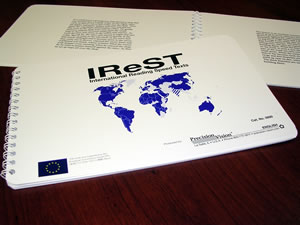
Deploying verified, multi-alternative forced-choice paragraphs across your tracking rooms eliminates memorization bias and yields pristine reading metrics.
Purchase IReST CatalogPlan an itinerary stop at our technical demonstration pavilion during the following upcoming annual meeting:

Share Your Clinical Case History Stories
Precision Vision® wants to spotlight your contributions. Tell us how your team is actively leveraging our standardized metrics to impact low-vision outcomes. Do you have an interesting workflow profile or unique clinical study success to share involving a Precision Vision® product? Connect with our tracking desk and we may feature your narrative in a future bulletin.
Submit Case Story to Editorial Desk
%0A%20%20%20%20%20%20%20%20%0A%20%20%20%20%20%20%20%20%0A%20%20%20%20%20%20%20%20%20%20%20%20Precision%20Vision%20Showcases%20Prototype%20of%20the%20Expand...)